Food & Beverage
Restaurants, cafés, kitchens and beverage operations where taste, scale and equipment protection matter.
Commercial water softening, filtration, reverse osmosis and application-specific treatment selected around your source water, peak flow, operating schedule, equipment and finished-water requirements.
Restaurants, hotels, condominiums, healthcare facilities, car washes, schools, boiler systems, cooling towers and production facilities can have very different water-quality and flow requirements. Purify evaluates the application before recommending equipment.
Restaurants, cafés, kitchens and beverage operations where taste, scale and equipment protection matter.
High-demand treatment for guest rooms, kitchens, laundry, boilers and water-using equipment.
Building-scale hardness, filtration and water-quality solutions for multi-residential properties.
Softening, filtration and RO pathways for equipment protection and spot-free rinse applications.
Treatment selected around facility water requirements, equipment and applicable standards.
Commercial treatment for campuses, kitchens, boilers and other institutional applications.
Hardness and water-quality management to support boiler and steam-system pretreatment needs.
Filtration and side-stream treatment pathways for cooling-water applications.
Process-water treatment selected around source water and finished-water specifications.
Purify commercial systems can be configured as individual treatment stages or as a treatment train. Final equipment, media, controls and sizing are confirmed from water analysis, flow demand and the intended application.
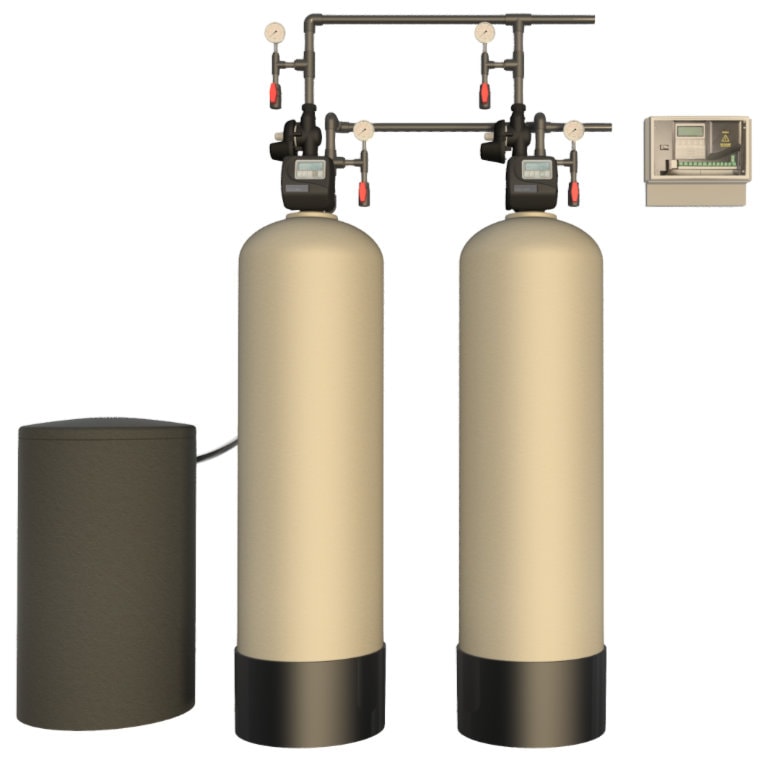
Ion-exchange softening for commercial hardness and scale management, sized around peak and continuous flow requirements.
Request sizing →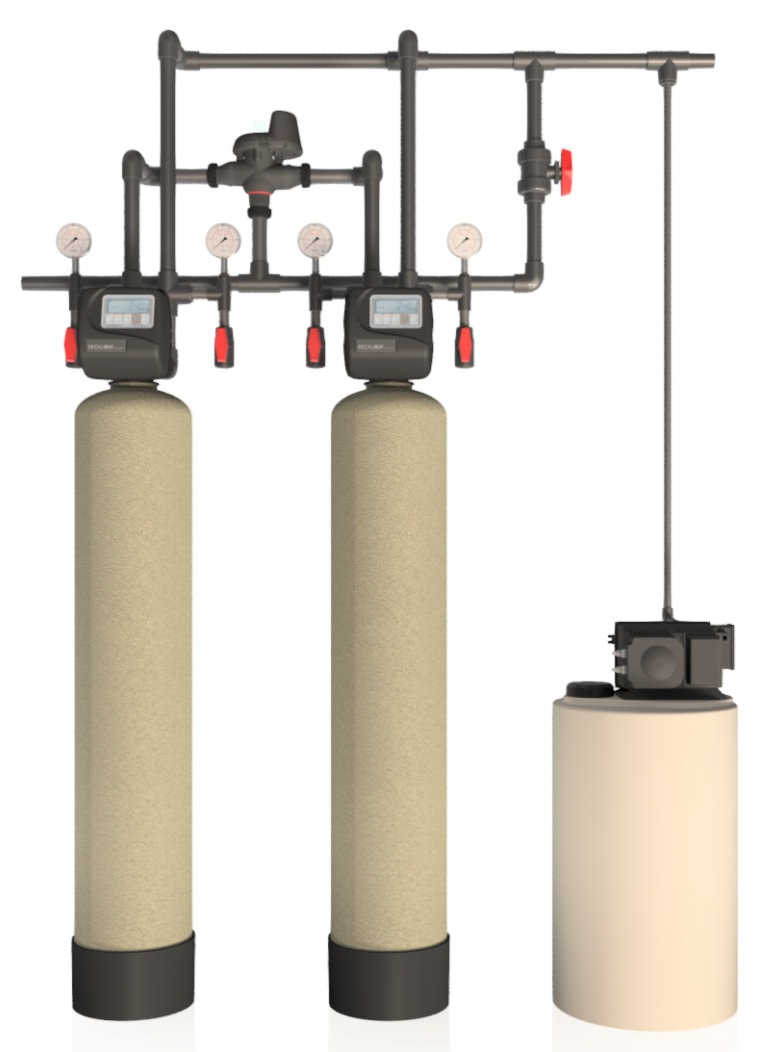
Application-specific filtration for identified treatment goals such as sediment, turbidity, iron, manganese, sulphur and chemical reduction.
Discuss filtration →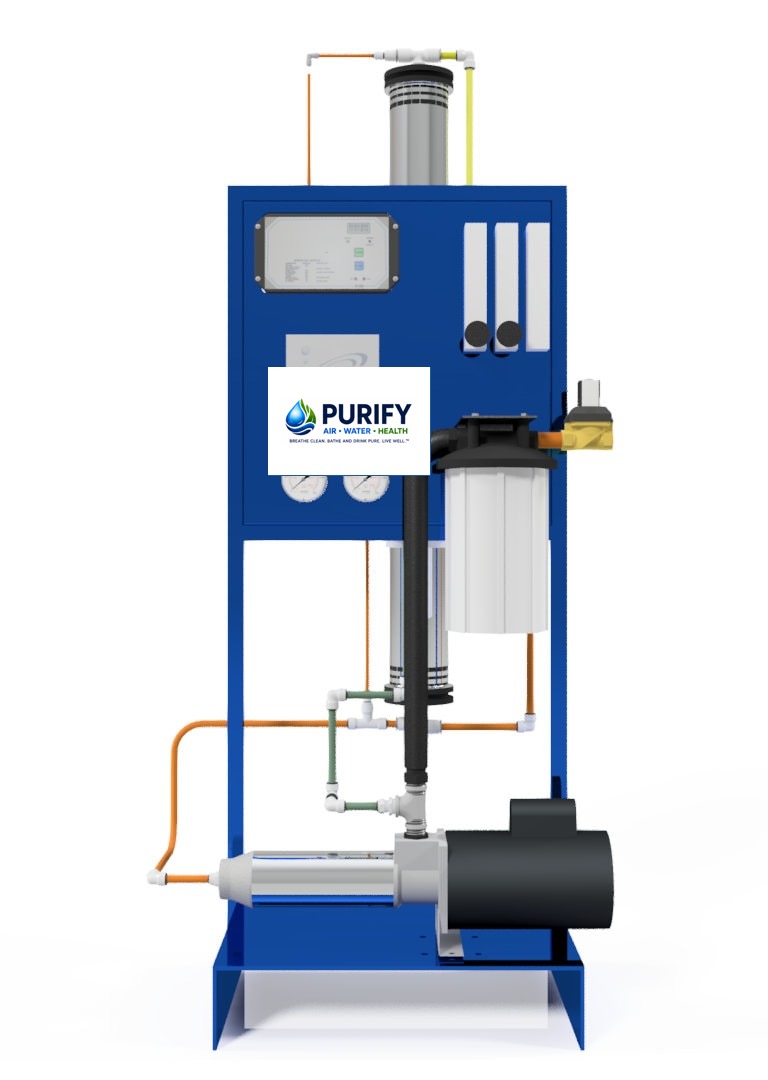
Membrane treatment for applications requiring reduced dissolved solids and higher-purity water. Pretreatment and storage are designed as part of the complete system.
Explore commercial RO →Media-based treatment can be evaluated for chlorine, chloramine and other identified chemical-reduction objectives where supported by water analysis and system design.
Evaluate treatment →Problem-water treatment for applicable commercial well-water supplies, selected only after the cause and loading are established.
Review water test →Suspended-solids and turbidity management selected around particle loading, flow and downstream equipment requirements.
Assess filtration →Ultraviolet treatment can be incorporated where microbial treatment is appropriate, with pretreatment and flow requirements confirmed first.
Discuss UV →Treated-water storage, repressurization and distribution can be integrated with RO and other commercial treatment systems.
Plan a system →ADDITIONAL COMMERCIAL TREATMENT OPTIONS
Some commercial applications require treatment beyond conventional softening, general filtration or reverse osmosis. Purify evaluates source water, operating conditions, flow and the application before selecting the appropriate treatment pathway.
Commercial scale-management options can be evaluated where conventional ion-exchange softening is not the preferred treatment approach. Final selection depends on water chemistry, equipment requirements, flow and the intended application.
Discuss Scale Control →Side-stream filtration can be evaluated for applicable cooling-water systems where suspended solids and turbidity management are part of the treatment objective. System selection depends on operating conditions, flow and water analysis.
Evaluate Cooling-Water Treatment →Commercial reverse osmosis uses membrane separation to reduce dissolved solids and other constituents that the selected membrane and pretreatment are designed to address. System design can include pretreatment, membrane equipment, storage and distribution.
Common uses: food and beverage operations, spot-free rinse, process water, boiler pretreatment and other applications with defined finished-water requirements.
It depends on source water, hardness, chlorine or chloramine, equipment, menu and finished-water requirements. A restaurant may use softening, carbon filtration, reverse osmosis or a combination treatment train.
Where hardness is creating scale or equipment problems, commercial softening may be appropriate. Sizing must account for occupancy, peak flow, plumbing and regeneration requirements.
Commercial RO is considered when the application requires lower dissolved solids or higher-purity water than conventional filtration alone can provide. Pretreatment requirements depend on the source water.
Reverse osmosis is commonly evaluated for final-rinse applications because reduced dissolved solids can reduce mineral spotting. The complete design depends on feed-water quality and production demand.
Appropriate media filtration can be designed to reduce chlorine or chloramine, but media type, contact time, flow and the actual water chemistry must be considered.
Sizing uses water analysis, peak and continuous flow, daily demand, operating hours, plumbing, equipment requirements and the desired finished-water quality.
Tell us about your facility, water source, application, concerns and approximate demand. Purify can help identify the treatment categories to evaluate and whether water testing or a more detailed site assessment is required.